
Built in plain English.
How the work gets done at Sing for Hope
“I was just about to invite someone to the next step by email… How can I get the system cued up with several pre-written emails so I can pick which one I want for which candidate?”
“Shipped and live. Compose Email now has a stage picker that cues the right template for each candidate.”
No one at Sing for Hope writes code.
This is the story of how that ask got answered, and what it could mean for an organization like yours.
Everything you are about to see is real.
Two of the three things you will see are running live on the internet right now. The third is where we are going.
One thing to watch the whole way through: where the machine acts on its own, and where it stops and waits for a person.
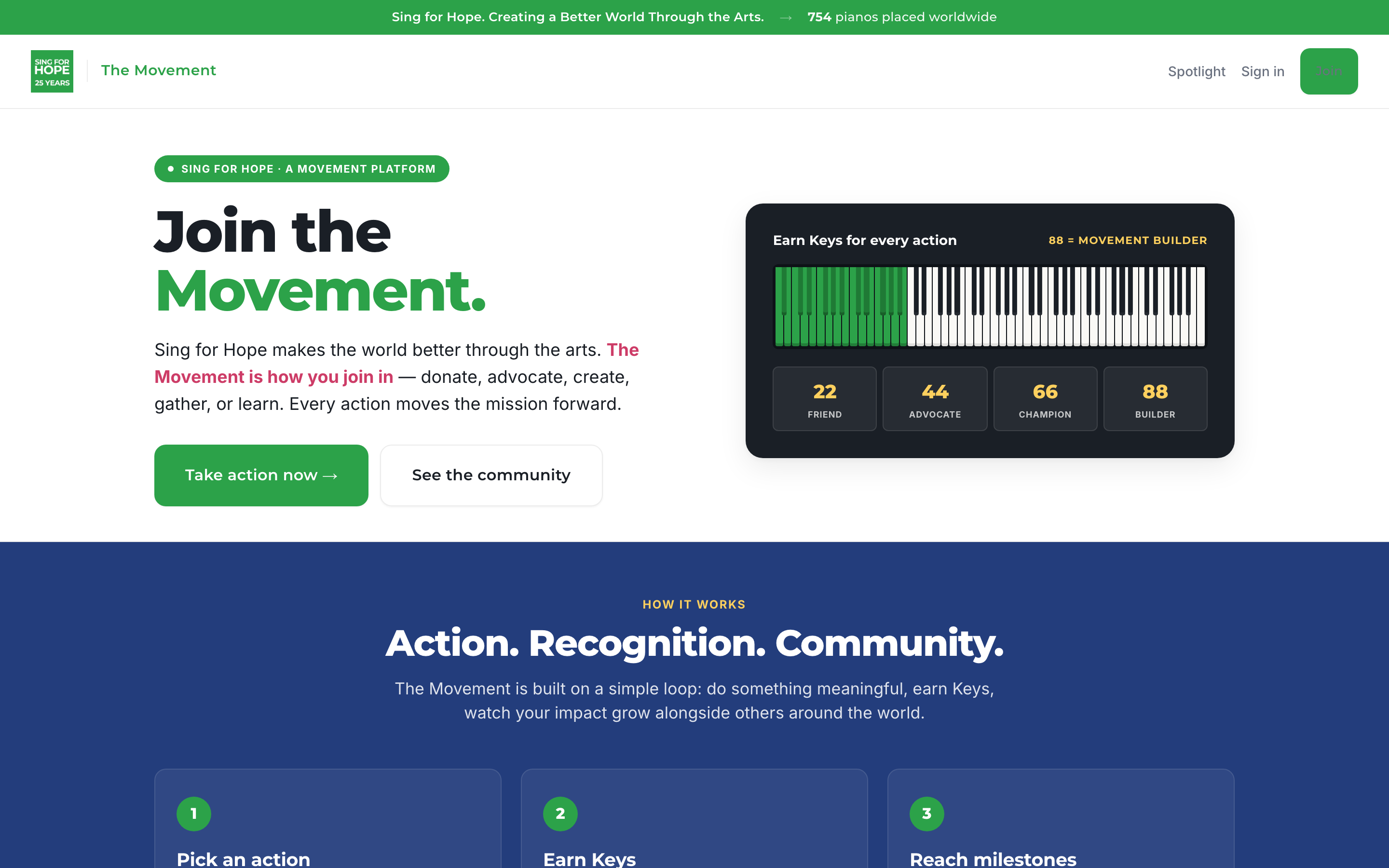
Join the Movement
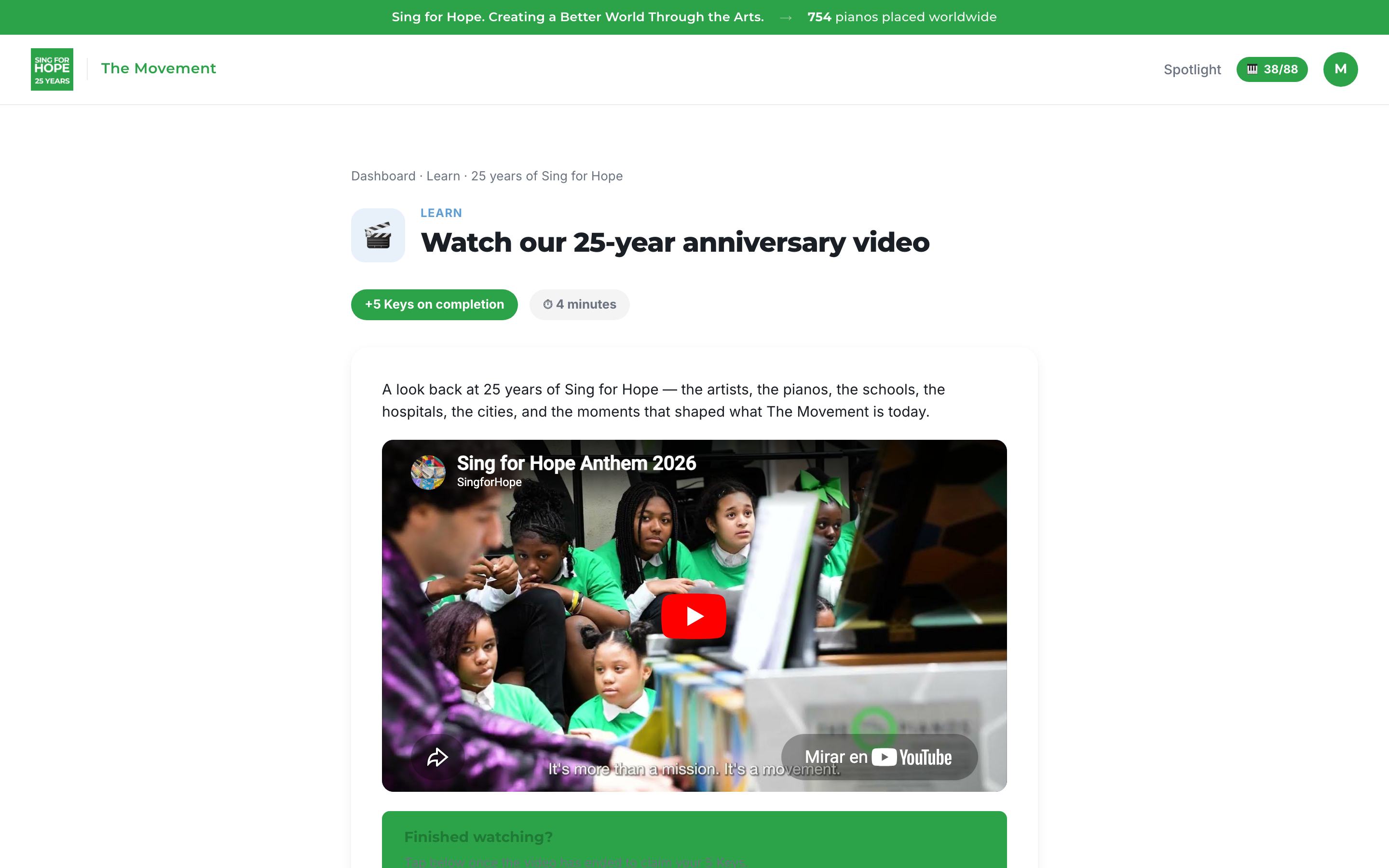
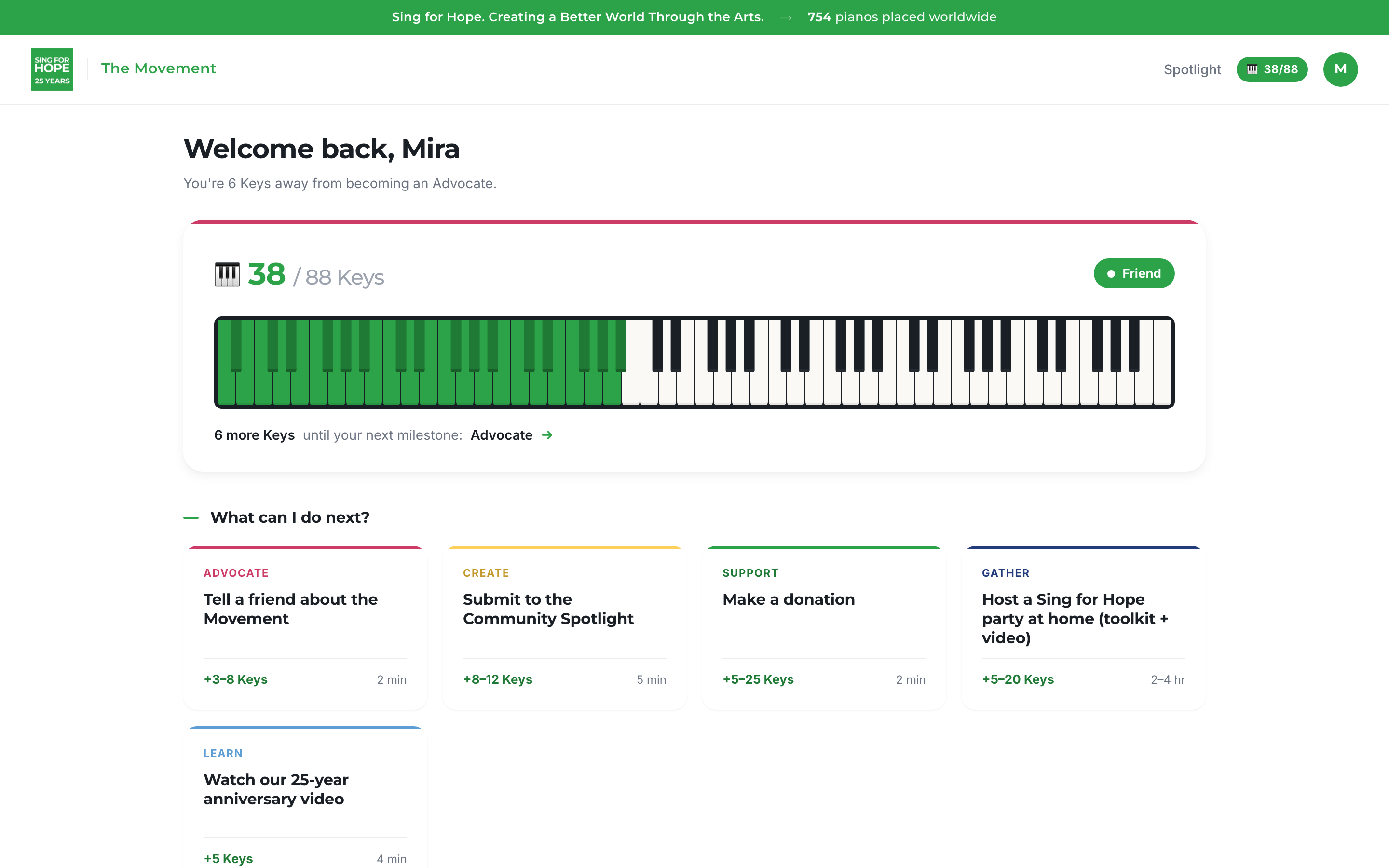
A public platform where anyone can take a real action for the arts. Pick an action. Do it. See the movement grow.
In design · not yet live · shown as it stands
The working designs
The hiring portal
careers.singforhope.org
Inside the portal
Names hidden on purpose
- 1 Understand reads the email, loads the history
- 2 Find the code locates every file the change touches
- 3 Build and check makes the change, checks its own work
- 4 Independent review three separate reviewers look for problems
- 5 Try it as a user clicks through the real flow end to end
- 6 Human check asks: does a person need to approve this?
- 7 Publish and verify puts it live, then confirms it is live
- 8 Reply to Richard writes back with what changed
Before anything publishes, the system asks: does a person need to approve this? It stops and waits when a change would email a candidate, move money, change who sees what, or write to anyone new. Richard set that rule himself, by email: “Never reach out to any candidate without permission.” The system holds it.
It knows what it must not do alone.
- Copy changes on our own pages
- Fixes to layout and links
- New internal admin views
- Replies to the person who asked
- Anything that emails a candidate
- Anything that touches money
- Anything that changes who sees what
- Anything sent to someone new
“Never reach out to any candidate without permission.” · Richard, by email, June 16
Same loop, every time. Asked in plain English.
At the outside-developer rates our leadership set, two recent weeks of this way of working came to about $153,000 of development we did not have to buy. That budget stays in the art.
The boring work counts too
“We need the system built on a single, standardized infrastructure… access and control are segmented into three tiers of permissions.”
Live. Three permission tiers, department by department. No ticket. No vendor. An email.
inventory.singforhope.org · staff sign-in
All of this belongs to an arts nonprofit born at a firehouse.
Born downtown
After September 11, two Juilliard trained singers, Camille Zamora and Monica Yunus, sang for the recovery workers at the firehouse near Ground Zero. Everything since grew from that act.
Became an institution
Sing for Hope incorporated as a nonprofit and built its programs on one belief: art belongs to everyone, everywhere.
A global stage
754 Sing for Hope Pianos across 20 countries. Five programs spanning education, health, and public space. And a new way of working.
We did not buy this. We built it into how we work.
Hiring. Inventory. Curriculum. Payroll. This deck. One loop underneath all of it, and it starts with a plain-English ask, wherever you already work.
Want to see how this would look inside your organization? Come find us today. We will walk your team through the real thing, live.
Saving regenerates the audio (~1–3 s) using the selected voice. Tone tags in [brackets] aren't read aloud — they shape delivery. Try [upbeat], [whispers], [urgent], [long pause], [warm], [excited], or describe a vibe. The new MP3 replaces deck-narration/v6/s{N}.mp3 in storage; the deck cache-busts so the next playback uses the new clip.
Drop a voice memo (.m4a), any audio file, or click 🎤 Record to capture live. ElevenLabs converts it to the selected voice while preserving your delivery. Only ElevenLabs voices are supported — Hume voices will show an error.
Notes persist through Supabase (deck-state bucket) so a refresh — or another reviewer's browser — sees the same log. Auto-dev dispatches an agent to implement the change.
Narration script
- → Space PgDn
- Next slide
- ← PgUp
- Previous slide
- Home / End
- First / last
- 1–9
- Jump to slide
- F
- Toggle fullscreen
- S
- Toggle stage mode (hide all chrome)
- N
- Open presenter notes window
- Shift + N
- Toggle bottom-overlay fallback
- V
- Toggle Emcee narration
- A
- Toggle auto-advance
- ? / Esc
- Toggle / close this
Tip: open the presenter window before entering fullscreen (some browsers block popups from inside fullscreen). If popups are blocked, Shift + N falls back to the bottom overlay.